
No-Kafala in Bahrain: How New Employee Mobility Rules Affect Employers
What happens when a skilled employee decides to move before your business has planned the handover? That question affects hiring, retention, permit planning, and workforce costs. The No-Kafala system in Bahrain gives eligible expatriate workers more room to change employers through LMRA processes. Therefore, companies need stronger contracts, better records, and faster HR responses. At the same time, Bahrain employee mobility rules place more weight on lawful procedures.
We at Jitendra Consulting Group help employers organise these duties and keep employee movement aligned with official requirements.
What Does No-Kafala Mean for Bahrain Employers?
The change does not remove employer rights. Instead, firms protect them through stronger records. Employers now rely on contract terms, permit status, notice records, and LMRA procedures. The No-Kafala system in Bahrain allows eligible expatriate employees to seek a transfer without depending only on an employer release. Therefore, retention starts earlier. Moreover, Bahrain employer compliance rules require firms to keep employment records aligned with permit duties. Consequently, firms should treat mobility as routine workforce planning.
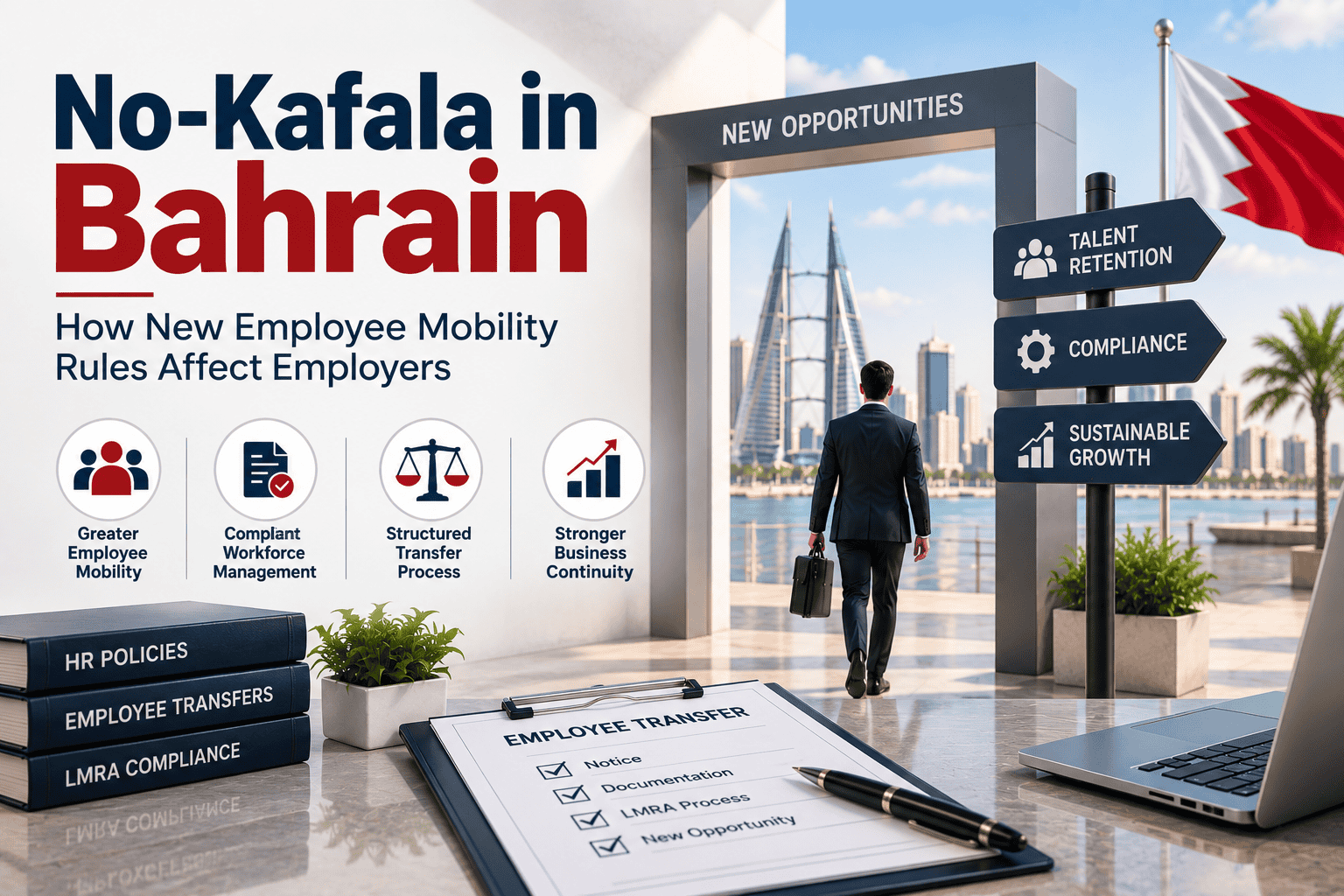
Can Employees Change Jobs Without Employer Release in Bahrain?
Eligible expatriate employees can use the formal transfer route without a traditional release letter. However, the process still follows LMRA conditions. The updated Expatriate Employee Transfer service, dated 8 July 2026, allows an expatriate worker to move to another employer without first cancelling the existing work permit. Therefore, changing employers in Bahrain remains a regulated process. Consequently, employers should keep contract dates, permit dates, and employee notices together.
What Are the Current Employee Transfer Rules in Bahrain?
Bahrain employee mobility rules focus on formal transfer steps rather than personal approval alone. An eligible worker must meet LMRA requirements before moving. Therefore, employers should check permit status, service period, and any filed intention to transfer. The receiving employer must also complete its steps. Bahrain expat employment rules also keep permit compliance central. For example, the transfer service lists a BHD 5 administrative fee and a standard processing time of three working days. Therefore, businesses should prepare handovers early.
When Can an Employer Object to an Employee Transfer?
An employer can raise concerns when a transfer does not follow legal or permit conditions. However, the concern should rest on records and applicable rules. Therefore, companies should maintain signed contracts, attendance records, notice documents, and LMRA correspondence. Bahrain employer compliance rules support this record-led approach. Likewise, HR procedures should define who reviews a transfer notice, checks the permit, and manages the handover. Also, this structure helps management separate transfer issues. Accurate documentation remains a strong employer safeguard.
How Do LMRA Work Permit Transfers Work Under the New System?
The LMRA process connects the employee, current employer, and receiving employer through permit records. First, the employee must meet transfer conditions. Next, the receiving employer completes the application. Then, LMRA reviews the request against employment and permit records.
Meanwhile, LMRA links changing employers in Bahrain to lawful work authorisation. Therefore, employees should join the new company only after required approval. Bahrain expat employment rules continue to govern employment status. In turn, employers should track notice, payroll, asset return, and final documents together.
What Happens When an Employee Leaves Without Completing the Transfer Process?
Permit status still shapes the next step. After cancellation, an employee generally has 30 days to leave the country or transfer under another employer. Therefore, businesses should close employment records in line with the official permit process. HR teams should check payroll, leave, company property, and permit records together.
At the same time, managers should record the final working date and pending handover items. Consequently, finance and HR teams work from the same employee status, supporting orderly exits and accurate records.
What Compliance Risks Do Bahrain Employers Face Under No-Kafala?
Mobility increases the need for disciplined compliance. Employers must ensure each expatriate works under the correct permit and payroll records support employment. Moreover, LMRA rules allow enforcement when employment falls outside permit conditions. Therefore, companies should connect recruitment, HR, payroll and immigration records. Also, managers should review transfer requests early and assign ownership. As a result, the company can reduce documentation gaps and protect handover schedules.
How Should Bahrain Companies Prepare for Greater Employee Mobility?
Employers can treat workforce mobility as part of HR governance. Therefore, employers should focus on retention, documentation and timely action.
- Review employment contracts and notice clauses on a fixed schedule.
- Track work permit expiry dates and transfer requests in one register.
- Keep payroll, attendance and employee records aligned with LMRA filings.
- Assign one responsible person to coordinate HR, finance and permit actions.
Moreover, managers should explain transfer procedures during onboarding. Likewise, file reviews help teams identify missing records early. Finally, a structured process supports employee movement while keeping business continuity organised.
How Can Jitendra Consulting Group Help Employers Stay Ready?
Employee mobility can affect staffing plans, payroll, visa timing and wider compliance duties. Jitendra Consulting Group supports SMEs and corporates with business setup, company formation, licensing, registration, compliance matters, visa assistance, banking guidance, VAT and accounting services.
The team also provides advisory support for post-registration requirements and workforce planning linked to business operations. This gives employers one professional point of support while they adapt internal procedures to changing employee mobility requirements and ongoing corporate obligations effectively.
 English
  Arabic